
8.2
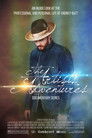
The Artist's Adventures
2016

Great Art Explained is a video series that focuses on one piece of art per episode, breaking it down, using clear and concise language free of 'art-speak'.
No reviews yet. Be the first to review!
Add to your list to track episode progress.
Mona Lisa by Leonardo da Vinci (short version)
2020-05-29 · 13m
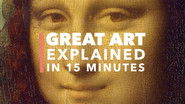
The Mona Lisa is without doubt the most famous painting in the world, yet perhaps we are over familiar with her. Here I explain why I think it is not only a great painting but also a revolution in art.
Picasso’s Guernica
2020-06-26
Guernica is the most famous anti-war painting in history, and Picasso’s best-known work. It has gone from a piece that was created in protest at the horrific bombing of a small village in northern Spain, to an icon and a universal symbol of freedom from ALL wars. Picasso said, “We all know that Art is not truth. Art is a lie that makes us realize truth”, and like so much of Picasso’s work it can be difficult to decipher the ‘truth’ in the political, artistic and religious symbolism. James Payne looks at some of the more acknowledged interpretations along with techniques, composition and artistic inspiration. Guernica is a masterpiece that always leaves the viewer with more than they brought to it, and here, Great Art Explained, traces the work from its underwhelming reception when first seen in 1937, through to its status over eighty years later as one of the most influential and iconic works of all time.

Michelangelo's David
2020-07-02 · 15m
Michelangelo was the first superstar artist. He was a sculptor, a painter, an architect, a poet and an engineer. An outsider touched by genius. His statue of David, the most famous statue in the world, personifies the aesthetics of High Renaissance art, the politics of Renaissance Florence, and the technical virtuosity of Greek sculpture. James Payne looks at the story of Michelangelo’s David, and discovers it is anything but the story of a teenage boy king who slew Goliath.

The Raft of the Medusa by Théodore Géricault
· 15m
This is the story about the painting of the raft that shook the world and scandalised high society. Not only for its anti-royalist statements but also for its choice of a black man as the hero. In an age of slavery. In its brutality, realism, and raw emotion it captures the essence of a historic event that shocked the French public, a Revolution-weary public that was not easy to shock. The story behind the painting is as devastating as the desperation on canvas.

Frida Kahlo's 'The Two Fridas"
2020-08-02 · 15m
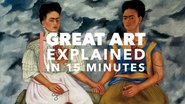
Frida Kahlo is the most famous female artist in history. She deviated from the traditional portrayal of female beauty in art, and instead chose to paint raw and honest experiences. A near fatal bus accident at 18 left Frida crippled and in chronic pain her whole life, but she managed to make a virtue out of adversity, and astonishing original art out of her pain. She was a Mexican, female artist who was disabled, in a male-dominated environment in post-revolutionary Mexico. A feminist icon who broke all social conventions, and produced some of the most haunting and visionary images of the 20th century. James Payne explains 'The Two Fridas', her greatest painting, created during a period of deep instability fro Frida Kahlo.
The Arnolfini Portrait by Jan Van Eyck
2020-08-30 · 15m
The Arnolfini Portrait by Jan Van Eyck has baffled art historians ever since it was painted in 1434. It has been dissected and analysed, maybe more than any other painting in history, and in the process, become even more mysterious. During the medieval period, a rapid expansion in trade and commerce led to the rise of a new class, the incredibly wealthy and powerful merchant class. Bruges in the 15th century was the hub of international trade, and people came from all over the world, wanting to get rich. Including the Arnolfinis from Lucca in Italy. As those Merchants became richer, their appetite for social status grew. Consumerism was rampant and the ultimate way to show off your wealth was to commission a portrait. And by the 1430s, a portrait by Jan Van Eyke was the most exclusive status symbol

Artemisia Gentileschi
2020-09-03 · 15m
Women were excluded from almost all cultural and social resources in the centuries from 1400 to 1900 when so much of the world's great art was created. And visual art was almost entirely a male industry before modern times. Having an artist for a father was about the only way women could get access to the training expected of artists in Renaissance and baroque Europe. Women were not allowed to do apprenticeships, attend life classes or be members of the academies. Orazio Gentileschi, Artemisia’s father, was a well-known painter, who saw the potential in her from an early age and promoted her talent. Gentileschi became the very first woman accepted into the prestigious Florentine Academy of Fine Arts. Through her talent and determination she had a 40-year career, and was collected by the likes of Charles I of England and Philip 4th of Spain. And yet, she was largely forgotten and written out of art history for 300 years. Why? The simple answer is, because she was a woman.

Andy Warhol's Marilyn Diptych
2020-10-08 · 15m
Andy Warhol made “Marilyn Diptych” in 1962, right after Marilyn Monroe’s death. By the 1960s Marilyn’s film career as a sex symbol was all but over. Warhol would effectively immortalize Marilyn as the sex symbol of the 20th century. The seductive blonde Marilyn with the heavy-lidded eyes and parted lips is frozen in time. She is transformed into the personification of the allure and glamour of Hollywood's Golden Age. Marilyn would make Warhol a household name, and Warhol would make Marilyn an icon. Marilyn Diptych is perhaps his greatest canvas, bringing together celebrity, death and exposure. It is both a warning and a love letter to America. Warhol, who is often criticised as vacuous or superficial, produced art, that is profoundly subversive and quite simply a perfect mirror of our times. Andy Warhol and Marilyn Monroe were both the embodiment of the American dream. They also, both projected a vacant persona that made sure no-body knew the real person behind the mask.

Monet's Water Lilies
2020-11-06 · 15m
Claude Monet is often criticised for being overexposed, too easy, too obvious, or worse, a chocolate box artist. His last works, the enormous water lily canvasses are among the most popular art works in the world. Yet there is nothing tame, traditionalist, or cosy about these last paintings. These are his most radical works of all. They turn the world upside down with their strange, disorientating and immersive vision. Monet’s water lilies have come to be viewed as simply an aesthetic interpretation of the garden that obsessed him. But they are so much more. These works were created as a direct response to the most savage and apocalyptic period of modern history. They were in fact conceived as a war memorial to the millions of lives tragically lost in the First World War.

Mark Rothko's Seagram Murals
2020-11-27 · 15m
On the 25th February 1970, the Tate gallery in London received nine Mark Rothko canvasses, a generous donation from the artist himself. A few hours later, Rothko was found dead in his studio on East 69th Street in Manhattan. The 66-year-old painter had taken his own life. His suicide would change everything and shape the way we respond to his work. Rothko was aware that people often burst into tears when confronted with his painting. “I’m interested only in expressing basic human emotions, tragedy, ecstasy, doom and so on” he said.

The Thinker by Rodin
2020-12-29 · 15m
The Thinker, captured in a moment of concentrated introspection has come to represent a multitude of ideas about the nature of man and his place in the world. For some it is a symbol of knowledge, others philosophy, even existence itself. As the critic Gabriel Mourey said: “It is simply a man for all time”. Yet, Rodin had no intention of producing such a complex universal symbol when he first conceived the idea. And The Thinker itself might never have existed, if Rodin had been accepted by the establishment in the first place.

2016
2017
2014
2018
2011
2014
2013

2022

2013
2016
2020
2021
1986

2024

2017
2022
1983
2020
2023
2020

2021
2014

2020
2022