


5.5

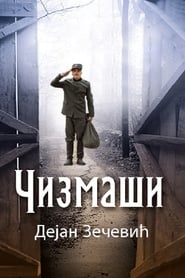
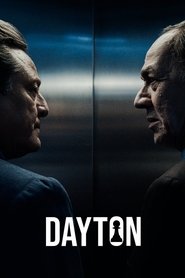
The eight-episode series follows the life of the writer Ivo Andrić during several months in the fall and winter of 1961, from the moment he found out he had won the Nobel Prize until he returned from the award ceremony, via Switzerland, to Belgrade. Each of the episodes has two parallel streams of narration: one, related to the year 1961, in which we follow Andrić's preparations for going to Stockholm, and the second, a subjective jump back to the past. Andrić's view of the key moments of his own life, which were almost always the key moments of the country where he lived and lives, the encounters and decisions he made, is full of questioning, doubts and re-evaluation. Through eight episodes, the most important, well-known and less well-known, paths that Andrić walked, the faces that surrounded him and the places where he lived during the winter of 1961 and throughout his life are revealed and followed.
Directed by Tihomir Stanić
No reviews yet. Be the first to review!
Add to your list to track episode progress.
Nobel Prize
2024-10-05 · 49m
On October 26, 1961, news arrived that Andrić had received the Nobel Prize for Literature. While receiving telegrams and congratulations, Andrić recalls the past, returning to the time of the Allied bombing and the struggle for the liberation of Belgrade in 1944, when he lived in Prizrenska Street, with his friend and lawyer Brana Milenković and his sister Kaja. That period was marked by fruitful creativity and his secret love with Milica Babić. In the atmosphere of uncertainty of the first days of the liberation of Belgrade and the beginning of the creation of socialist Yugoslavia, Andrić goes through ethical dilemmas and accusations from the citizens of Belgrade that he betrayed his friends and conscience. Andrić then, when his characteristics are under the scrutiny of the new regime, meets Đilas, Zogović and other writers in partisan uniforms.

Alliance
2024-10-06 · 50m
The Nobel Prize drew attention not only to the works of Ivo Andrić, but also to his biography. The reputation of the winner of the greatest prize in the world is also the reputation of the country from which he comes. State services, tasked with ensuring that reputation, are reviewing a video from a military parade in Berlin in 1940, where Andrić, then a diplomat of the Kingdom of Yugoslavia, is seen in the immediate vicinity of Hitler. In the writer's house, the phone doesn't stop ringing and Andrić feels that his whole life so far is exposed to the views and comments of the public. He goes back to the post-war years, to the founding assembly of the Association of Writers, the Belgrade meeting with Krlež, conversations with Isidora Sekulić. In 1945, Nenad Jovanović, Milica Babić's husband, returns from the Dachau camp, and Andrić goes to Bulgaria for the Meeting of Balkan Writers.
Telegram
2024-10-12 · 44m
The head of state of Yugoslavia perceives the Nobel Prize as a recognition of the country for its non-bloc and non-aligned policy. Dobrica Ćosić hurries Tito to send Andrić a telegram congratulating him. At the press conference, Andrić answers the journalist's questions about Bosnia and his childhood, recalling his stay in Sarajevo in 1945, going to his mother's grave, the assembly of ZAVNOBIH and meetings with Elije Finci and his school friend Boro Jevtić. From Sarajevo, he went to Guča Gora monastery, where he spent a period of his youth. Returning to 1961, Andrić receives Tito's telegram and the pressure to respond to it immediately, as well as a strange dream that leads him to the knowledge that he is probably the only person in the world who personally knew both Hitler and Gavrilo Princip.

The ceremony
2024-10-13 · 49m
Preparations for Stockholm are taking a long time. With Vera Stojić, his colleague, secretary and confidant of many decades, Andrić goes through the schedule of obligations in Sweden, through which their complicated relationship is revealed. While the drama The ceremony based on his short story is being broadcast on television, Andrić goes for a walk to Prizrenska to visit Kaja and Brana, whom he has not seen since he moved out of their apartment. He feels like a hostage to his own past, which in this episode drags him back to 1946, to his entrance speech at SAN and meetings with Milica, then to 1948, the year of the Informburo, which found him in the position of president of the Association of Writers of Yugoslavia, an Association whose many members were expelled for resolutions, and some sent to Goli Otok.

Medal
2024-10-19 · 49m
The state is still working on maintaining the reputation of the Nobel laureate and carefully combing through his past. Andrić sets off for Fruška Gora to the weekend home of his friend Mladen Leskovac. On the train, a man who introduces himself as a journalist hands him a box that once contained the medal he left with Brana Milenković for safekeeping. On Fruška Gora, together with Leskovac, he visits churches and monasteries. The line of memories extends to 1951, to an exhibition marking 10 years since the beginning of the war, where a photograph of the signing of the Tripartite Pact was displayed. Impressions of Isidora Sekulić regarding the yet-to-be-published "The Damned Yard" are recalled. After that, it moves to 1957, the year Milica's husband, Nenad Jovanović, passed away, and the following year, when Ivo Andrić and Milica Babić finally got married.

Speech
2024-10-20 · 48m
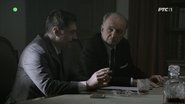
In Belgrade in 1961, there was a hepatitis epidemic. Andrić, along with Koča Popović, Vuča, and Čolaković, goes over the travel protocol and receives instructions regarding potential questions about dissident Milovan Đilas, whose book Conversations About Stalin is set to be published in New York. Andrić works with Vera Stojić on his speech for the award ceremony. A postcard arrives from Helena Ižikovska from Poland, which takes him back to the past, to 1914, when as a young student he lived with her family in Krakow. Upon learning about the assassination of Franz Ferdinand in Sarajevo, Andrić leaves Helena and Krakow and travels back to his homeland, first to Zagreb, then to Split, where he meets his friends, fighters against the Austro-Hungarian occupation, and his youthful love, Evgenija Gojmerac. As a member of Young Bosnia, Andrić is arrested by the occupation authorities and taken to a prison in Split.
Road
2024-10-26 · 48m
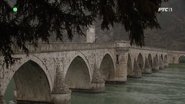
Jovan Ćirilov, the playwright of the Yugoslav Drama Theater of which Andrić was the chairman of the management board, is asking for permission to dramatize the Cursed Courtyard. Andrić remembers 1914 and his prison days and the time when, released from prison, he spent his confinement with his mother in Ovčarev and the Guča Gora monastery, hanging out with the friars. His memory takes him to Višegrad in 1917, to the bridge over the Drina where he meets his teacher Ljubomir, and to the Hospital of the Sisters of Mercy where he lies together with Ivo Vojnović, with whom he is planning a future Yugoslav theater. In 1919 and 1920, he hangs out with Crnjanski and Boro Stanković at literary evenings in the Hotel Moskva in Belgrade. At 61, he is waiting to write his will and go to Sweden to receive the Nobel Prize.
Appeal
2024-10-27 · 46m
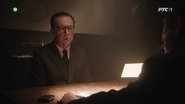
In Belgrade, at the "Censorship" Cinema, officials watch Andrić at the awarding of the Nobel Prize. Andrić returns from Stockholm with Milica via Switzerland, the country where he refused to take refuge at the beginning of the war and decided to spend the war with his people. His memory takes him to 1941, when he arrived in occupied Belgrade with Milica and Nenad Jovanović and settled in the apartment of the Milenković family. This is followed by interrogations by the Special Police and pressure to sign the Quisling Appeal to the Serbian people. Andrić refuses to sign the Appeal and tries to distance himself from the occupation authorities. He is faced with everyday horrors: hangings at Terazije, terror of Germans and Nedicians, trains full of Greek Jews. Andrić retires to writing, but the pressure from the police is great, they question him again in connection with his Masonic past.
2008

2018
2023

2024

2007

2011

1993

2022

2007
2025

2006